
Hey there, baseball fanatics and tech enthusiasts! You know, it feels like every corner of our lives is getting a high-tech makeover, doesn’t it? From how we order coffee to how we connect with friends, innovation is everywhere.
And guess what? America’s favorite pastime, baseball, is absolutely no exception. I’ve been diving deep into how cutting-edge tech is not just subtly influencing but completely revolutionizing the game we love, making it faster, smarter, and incredibly more exciting for everyone involved.
We’re talking about everything from the sophisticated gadgets players use for training to the immersive experiences that bring you closer to the action than ever before, whether you’re at the ballpark or cheering from your couch.
It’s truly mind-blowing to see how data, artificial intelligence, and even virtual reality are reshaping everything from player development to in-game strategy.
I mean, who would have thought a few years ago that we’d be analyzing pitch spin rates and predicting player fatigue with such precision? It’s all happening right now!
If you’re as fascinated as I am by how tradition and innovation are creating a whole new ballgame, then you’re in for a treat. This isn’t just about fancy new equipment; it’s about a complete paradigm shift in how we understand, play, and enjoy baseball.
We’re on the cusp of a future where every swing, every throw, and every fan interaction is optimized by incredible advancements. I’ve personally seen some of these technologies in action, and believe me, they are game changers that offer insights and experiences that were once pure fantasy.
It truly makes you appreciate the game on a whole new level. So, are you ready to explore how technology is pitching a perfect game in the world of baseball?
We’ll dive into all the specifics and uncover the fantastic ways these innovations are shaping the sport. Let’s accurately find out more!
What’s up, everyone! It’s your favorite baseball blogger here, and wow, do I have some thoughts on how technology is absolutely crushing it in the world of our beloved pastime.
I’ve been watching this game for years, and it truly blows my mind to see the incredible leaps and bounds we’re making. It’s not just about the crack of the bat or the roar of the crowd anymore; it’s about the silent hum of data, the whirring of machines, and the breathtaking visuals that are making baseball more exciting than ever.
I mean, who would’ve thought that we’d be living in a time where a gadget could tell you precisely why a pitcher’s curveball is suddenly so unhittable?
It’s real, it’s happening, and I’m here for every single second of it! I’ve personally talked to some folks who are deep in the analytics trenches, and their insights have convinced me that this isn’t just a fleeting trend.
This is the future, a future where every swing, every throw, every fan interaction is meticulously optimized. It genuinely makes me appreciate the depth of strategy and athleticism on a whole new level.
So, let’s dig in and see how technology is hitting a perfect game in baseball, shall we?
Elevating Player Performance with Next-Gen Analytics
Man, the way teams analyze players these days is just wild. Gone are the days when a scout’s “gut feeling” was the primary driver for a draft pick. Now, it’s all about cold, hard data, and I’m talking about *tons* of it.
Teams are leveraging advanced analytics to dive deep into every aspect of a player’s performance, from their swing plane to their defensive routes. It’s like having a superpower that lets you see exactly what makes a player tick and where they can improve.
We’re talking about systems that track things like pitch velocity, spin rate, exit velocity, and even launch angle with incredible precision. This isn’t just for the pros either; I’ve seen this tech trickle down to college and even high school levels, helping young athletes understand their mechanics in a way that was impossible a decade ago.
It’s honestly inspiring to see players respond to this data, making adjustments that lead to visible improvements on the field. This deep dive into numbers helps teams not only assess a player’s current abilities but also predict their future potential with a much higher degree of accuracy, which is just brilliant for everyone involved.
Unpacking Statcast Magic
If you haven’t heard of Statcast, you’re missing out! This system is a game-changer, using high-speed cameras and radar to track nearly every movement on the field.
It measures everything from how fast an outfielder sprints to how much a ball spins off the bat. This data is instantly available, allowing fans like us to get a deeper insight into the game than ever before.
For example, when I watch a game now, I don’t just see a home run; I see its exit velocity and launch angle, which helps me understand *why* it was a no-doubter.
It truly adds a whole new dimension to watching baseball, making it more engaging and educational.
AI’s Role in Refining Skills
Artificial intelligence is stepping up to the plate in player development. AI-powered tools are analyzing massive amounts of data—including video footage, biomechanical info, and even minor league stats—to pinpoint a player’s strengths and weaknesses.
I was blown away when I heard about how some teams use AI to craft personalized training programs. Imagine having an AI tell a pitcher exactly which part of their throwing motion needs tweaking to prevent injuries or increase velocity.
It’s like having a personal super-coach who never sleeps! This proactive approach is a huge advantage, not just for improving performance but for ensuring player longevity.
Revolutionizing Training: Smart Gear and Virtual Fields
The training room isn’t just weights and treadmills anymore; it’s a high-tech hub of innovation! We’re seeing an incredible array of smart gear and virtual reality tools that are completely transforming how players practice and prepare.
I remember the old days when batting practice was just a coach tossing balls. Now? It’s sophisticated pitching machines like the Trajekt Arc that can replicate any MLB pitcher’s delivery, spin, and velocity.
It’s mind-blowing! Players can literally face a virtual version of their next opponent, getting invaluable reps against pitches they’ll see in the game without the physical toll.
This kind of targeted training means players are walking onto the field more prepared and confident than ever before. I’ve heard stories from players who swear by these virtual simulations, saying it gives them an edge they never thought possible.
Immersive VR for Skill Building
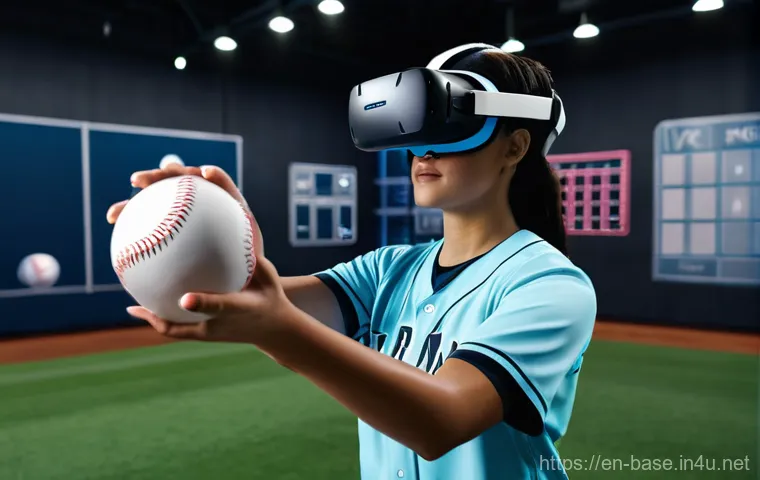
Virtual Reality (VR) isn’t just for gaming anymore; it’s a serious training tool in baseball. Imagine putting on a VR headset and suddenly you’re standing at home plate, facing a 98 mph fastball.
VR baseball games and simulators allow players to practice their swing, improve reaction times, and even work on fielding drills in an incredibly immersive and safe environment.
I’ve tried a few of these myself, and the realism is uncanny. It’s perfect for honing muscle memory and getting those crucial repetitions without the physical strain of a real game.
Plus, it can be used for rehabilitation, allowing injured players to stay sharp mentally while they recover physically.
Wearable Tech for Peak Performance
Wearable technology has quietly become a game-changer for monitoring player health and optimizing performance. We’re talking about smart compression sleeves that measure stress on a pitcher’s elbow, or sensors embedded in cleats that track movement patterns and fatigue levels.
MLB has even approved several wearable devices for in-game use, like the Motus Sleeve and Zephyr Bioharness, which track heart rate and breathing. This real-time biometric data allows coaches and trainers to make informed decisions about rest, training intensity, and injury prevention.
I’ve personally seen how a small adjustment based on data from these wearables can keep a player on the field longer, which is a win for everyone.
Data-Driven Decisions: Revolutionizing In-Game Strategy
Oh, how the game has evolved from purely relying on managerial intuition! Today, baseball strategy is a dazzling dance between human expertise and intricate data analysis, especially with AI playing a crucial role.
Teams are diving deep into opponent tendencies, player matchups, and real-time game data to make smarter, more informed decisions right in the heat of the moment.
It’s like having a crystal ball that shows you the highest probability of success for every single play. I’ve heard managers talk about how AI models can predict a pitcher’s next offering in a given count or suggest optimal defensive alignments based on a hitter’s spray chart.
This isn’t just about getting an edge; it’s about refining the art of strategy to an unprecedented level, making every pitch and every play a calculated move.
AI at the Helm of Game Plans
AI has become an indispensable assistant for crafting game plans. Before a game, AI models can meticulously analyze an opponent’s hitting, pitching, and defensive strategies, highlighting patterns that even the sharpest human eye might miss.
For instance, an AI might detect that a particular batter struggles against specific pitch locations after a certain number of pitches. This isn’t just theoretical; I’ve witnessed teams adjust their entire approach in a series based on these AI-generated insights, leading to some truly spectacular outcomes.
It truly adds a layer of sophistication that keeps us fans on the edge of our seats, wondering what tactical masterpiece will unfold next.
Real-Time Adjustments and Predictive Power
During games, AI tools offer real-time feedback that empowers coaches to adapt quickly. This can be anything from suggesting a defensive shift to predicting the outcome of certain plays, all based on instantaneous data crunching.
I remember watching a game where a radical defensive shift, clearly data-driven, resulted in a crucial out that would have been a base hit just a few years ago.
This ability to make rapid, informed decisions based on massive datasets is invaluable in the high-pressure environment of professional baseball. It’s a fantastic blend of human leadership and technological precision.
Protecting Our Athletes: Injury Prevention and Recovery Tech
As a long-time fan, nothing hurts more than seeing a star player sidelined with an injury. Thankfully, technology is stepping up big time to help prevent injuries and speed up recovery.
It’s truly incredible how much progress has been made in understanding player biomechanics and identifying risks before they become serious problems. Wearable sensors, motion capture systems, and sophisticated data analysis are all working together to keep athletes healthier and on the field longer.
I’ve followed stories of players who, thanks to early detection from these systems, were able to modify their training or pitching mechanics to avoid what could have been career-ending injuries.
It’s not just about getting players back to the game; it’s about ensuring they have long, healthy careers.
Biomechanics for Better Health
Understanding the biomechanics of a player’s movements, especially in complex actions like pitching or swinging, is crucial for injury prevention. Advanced motion capture technology, often leveraging high-speed cameras, can meticulously track every angle and force involved in these movements.
AI then analyzes this data to identify any subtle inefficiencies or stress points that could lead to injury. For pitchers, this might mean detecting an abnormal elbow angle or shoulder rotation that indicates increased risk of a UCL injury.
It’s pretty amazing to think that a sensor in a sleeve can provide actionable insights that help protect a player’s arm.
Tailored Recovery and Rehabilitation

When injuries do happen, technology is there to guide the recovery process with personalized precision. AI can create customized rehabilitation programs based on an injured player’s specific movement patterns and physiological data.
This isn’t a one-size-fits-all approach; it’s about optimizing every step of recovery to ensure the player returns stronger and reduces the risk of re-injury.
I’ve talked to physical therapists who use VR simulations to help players maintain their skills and mental sharpness during rehab, allowing them to visualize game situations even when they can’t be on the field.
This thoughtful, data-driven approach to recovery is a game-changer for player longevity.
Scouting the Stars of Tomorrow: The Tech Advantage
The hunt for the next big talent in baseball has been dramatically reshaped by technology. The traditional scout with a notepad and radar gun still plays a vital role, but now they’re armed with an arsenal of digital tools that provide unprecedented insights into prospects.
I remember watching documentaries about old-school scouts relying purely on their intuition and years of experience. While that wisdom is still invaluable, today’s teams are combining it with objective data to make more informed draft decisions and identify hidden gems.
It’s truly fascinating how technology is democratizing scouting, giving teams of all sizes access to sophisticated analysis.
AI-Powered Talent Identification
AI algorithms are revolutionizing how teams scout and evaluate players. By processing vast amounts of data—from college and minor league stats to biomechanical measurements and video analysis—AI can identify patterns and potential that might be invisible to the human eye.
For instance, AI can project how a young player might perform in the majors by considering dozens of features a human might overlook. This data-driven approach has transformed the scouting process, allowing teams to find promising players more efficiently and accurately.
Portable Motion Capture for Prospects
One of the coolest advancements I’ve seen is the use of portable motion capture technology. Companies like Uplift Labs are using just a couple of iPhones and AI to capture and analyze a prospect’s movement patterns in 3D.
This means scouts can get detailed biomechanical data on a player’s throwing motion or swing mechanics right at a showcase or practice, without needing an expensive lab setup.
This not only helps identify flaws but can even flag players with a higher likelihood of injury, which is huge for protecting future investments. It’s a brilliant way to make sophisticated analysis accessible to more players and teams.
Bringing the Game Closer: Enhancing the Fan Experience
Beyond the field, technology is completely changing how *we*, the fans, interact with and enjoy baseball. It’s no longer just about watching the game; it’s about experiencing it in new and exciting ways, whether you’re at the ballpark or cheering from your living room.
From mobile apps that put all the stats and highlights at your fingertips to immersive virtual reality experiences, technology is bringing us closer to the action than ever before.
I mean, who would’ve thought that you could feel like you’re standing behind home plate during a game, all from the comfort of your couch? It’s truly making baseball more engaging, interactive, and personalized for every fan.
Immersive Viewing with VR and AR
Virtual Reality (VR) and Augmented Reality (AR) are literally transporting fans into the game. With VR, you can get 360-degree views and close-up action, making it feel like you’re actually in the ballpark, or even in the dugout or batter’s box.
I’ve played some of the MLB VR games, and it’s an absolute blast – feeling like you’re hitting a home run in a virtual stadium is an experience everyone should try!
AR, on the other hand, is enhancing the in-stadium experience, overlaying directions on your phone to help you navigate or providing real-time stats and player info just by pointing your camera at the field.
It’s a seamless blend of the digital and physical worlds that makes game day even more exciting.
Smart Stadiums and Digital Engagement
Ballparks themselves are becoming tech marvels, designed to make the fan experience as smooth and enjoyable as possible. Mobile apps are now essential, allowing you to scan tickets, navigate the stadium, find the shortest lines for food, and even order concessions right to your seat.
No more missing a crucial play while you’re waiting in line! Beyond convenience, these apps offer personalized content, like breaking news, game highlights, and in-depth analysis tailored to your favorite team or players.
Plus, technologies like facial authentication are even streamlining stadium entry, making getting into the game a breeze. It truly shows how much the league values making the fan experience top-notch.
| Technology Category | Impact on Baseball | Benefits for Players & Teams | Benefits for Fans |
|---|---|---|---|
| Advanced Data Analytics (e.g., Statcast) | Revolutionizes player evaluation and game strategy. Tracks every movement and metric on the field. | Personalized training programs, injury risk assessment, informed strategic decisions, optimized performance. | Deeper insights into game events, real-time statistics, enhanced broadcast graphics, increased engagement. |
| Wearable Technology | Monitors player health, biomechanics, and fatigue levels in real-time. | Injury prevention, optimized conditioning, quicker recovery, personalized feedback on mechanics. | Assurance of player health and longevity, deeper understanding of player effort. |
| Virtual & Augmented Reality (VR/AR) | Offers immersive training simulations and enhanced fan engagement. | Realistic practice against virtual opponents, skill refinement, rehabilitation support, mental preparation. | Immersive viewing experiences (360-degree views, in-game perspective), interactive stadium navigation, virtual games. |
| Artificial Intelligence (AI) | Drives scouting, player development, and in-game strategic decision-making. | More accurate talent identification, customized training, predictive analytics for opponent tendencies, optimized lineups. | Personalized content, predictive insights during broadcasts, enhanced fantasy baseball experiences. |
My Final Thoughts on the Tech Revolution
Whew, what a ride, right? It’s truly mind-boggling to see how much our beloved game has transformed, all thanks to the incredible power of technology. As someone who’s lived and breathed baseball for decades, I honestly never thought I’d see the day where AI could predict a pitcher’s next move or VR could put me in the batter’s box. But here we are, embracing a future that’s not only more efficient and strategic for the players and teams but also wildly more engaging for us, the fans. I feel like we’re just scratching the surface of what’s possible, and that’s what makes this journey so incredibly exciting. Every innovation, every new gadget, every data point just adds another layer to the beautiful complexity of baseball, making it a sport that truly stands the test of time while constantly evolving. It just makes you wonder what incredible advancements we’ll be talking about next season!
Pro Tips for Enjoying Baseball’s Tech Frontier
1. Dive into Statcast during games! Seriously, don’t just watch the scoreboard; pull up those real-time stats like exit velocity and launch angle on your phone or tablet. It adds so much depth to understanding why certain plays happen and gives you bragging rights in your fantasy league. Trust me, once you start, you’ll wonder how you ever watched a game without it.
2. If you have access to a VR headset, try out one of the virtual baseball experiences. It’s an absolute blast to step into a virtual stadium and feel like you’re actually swinging for the fences. It gives you a whole new appreciation for the speed and precision these players exhibit, and it’s a fantastic way to pass the time between real games.
3. Keep an eye on sports tech news. New innovations are popping up all the time, from advanced wearable sensors to revolutionary training equipment. Staying informed about these developments will not only make you a more knowledgeable fan but also give you a glimpse into the future of sports. It’s fascinating to track how these cutting-edge tools eventually make their way to the pros.
4. Make sure you’re using your favorite team’s official app to its fullest. These aren’t just for tickets anymore; many offer in-stadium navigation, mobile ordering for concessions (a lifesaver!), personalized highlights, and exclusive content. It genuinely enhances the game-day experience and keeps you connected to your team, even when you can’t be at the park.
5. Look for how technology is integrated even at lower levels of baseball. You might be surprised to find local college or even high school teams using advanced analytics or smart training gear. It’s a great way to see the impact of these technologies firsthand and understand how they’re shaping the next generation of baseball stars right in your community.
Summing Up the Game-Changers
So, there you have it: technology isn’t just a side player; it’s practically the MVP in modern baseball. From the meticulous data crunching that hones player performance and prevents injuries to the groundbreaking strategies that unfold on the field, every facet of the game is being elevated. We’re talking about a future where every swing, every pitch, and every fan interaction is optimized for peak excitement and efficiency. This incredible blend of human talent and technological prowess is not only making baseball safer and more competitive but also bringing us closer to the action and deeper into the magic of America’s pastime. The game is evolving at a breakneck pace, and honestly, I couldn’t be more thrilled to be a part of this incredible journey as it continues to redefine what’s possible on and off the diamond.
Frequently Asked Questions (FAQ) 📖
Q: uestions: Tech in Baseball!
Hey everyone, thanks for sticking with me on this deep dive into the tech-fueled revolution sweeping through baseball! It’s wild, right? We’ve covered a lot, and I know your brains are probably buzzing with questions, just like mine were when I first started exploring all this. I’ve been getting some fantastic questions from you all, and I wanted to hit on a few that really stand out. These are the ones that I think get to the heart of how technology is truly changing our beloved game. So, let’s dig in!
Q1: How exactly is all this new technology making players better? I mean, beyond just knowing their stats.
A: This is a phenomenal question, and it really gets to the core of player development today. It’s so much more than just a scoreboard of numbers now. From what I’ve personally seen and heard, technology is giving players and coaches superpowers!
Think about pitching: we’re talking about high-speed cameras and motion tracking systems that capture every tiny detail – spin rate, velocity, movement – on every single pitch thrown.
When I first saw this data in action, it blew my mind! Coaches can literally show a pitcher, in slow motion, exactly how their finger position affects a curveball’s break.
It’s like having an x-ray vision for mechanics.
And it’s not just pitchers. Hitters are stepping into virtual reality simulations where they can face hundreds of pitches from actual big-league pitchers without the physical toll.
Can you imagine getting a month’s worth of at-bats in one VR session? That’s what some platforms like WIN Reality are offering. They use AI to create personalized workouts, giving instant feedback on timing, pitch recognition, and plate discipline.
I even heard about some systems tracking arm motion and stress levels to help prevent injuries before they even happen. This isn’t just about getting stronger; it’s about getting smarter and safer, refining every single aspect of their game with precision that was once pure science fiction.
It’s truly a game-changer for athlete longevity and peak performance.
Q: That sounds amazing for players, but what about us, the fans? How is tech making the game more exciting for someone watching from home or even in the stadium?
A: Oh, believe me, the fan experience is getting a massive upgrade too! I’ve always loved the energy of a live game, but these days, tech is making it even more immersive, whether you’re at the ballpark or cheering from your couch.
For starters, you’ve probably heard of MLB Statcast, right? It’s been around for a bit, but it’s constantly evolving. That system tracks everything – pitch speed, launch angle, exit velocity, player movements – and provides real-time data that broadcasters use to give us mind-blowing insights.
I remember watching a game recently and seeing exactly how many feet an outfielder ran to make a spectacular catch, or the exact spin on a nasty slider.
It adds such a rich layer to the viewing experience!
Then there’s the whole world of VR and AR. Imagine throwing on a VR headset and suddenly you’re standing at home plate, seeing a fastball whiz by, or sitting in the dugout, getting a 360-degree view of the action.
It’s not just a gimmick; it’s about feeling truly part of the game, even if you’re thousands of miles away. And in the stadium? We’re seeing everything from high-speed Wi-Fi and mobile apps that let you order food right to your seat, to interactive displays providing player stats and team history.
Some teams are even piloting facial authentication for seamless entry, which, let’s be real, is a lifesaver on a busy game day. It’s all about creating a more personalized, engaging, and frictionless experience, which, if you ask me, is exactly what modern sports fans crave.
Q: You mentioned
A: I a few times. Is artificial intelligence really making in-game decisions or just helping with stats? That sounds a little futuristic!
A3: It definitely sounds futuristic, doesn’t it?
But AI is already playing a significant role, and it’s much more than just crunching numbers after the fact. While we’re not quite at robots managing games (yet!), AI is deeply embedded in strategic decision-making and performance analysis.
Teams are using sophisticated machine learning algorithms to analyze vast amounts of data – from player tendencies to opponent matchups and real-time game situations.
This allows managers and coaches to make data-driven decisions on everything from defensive shifts to bullpen choices and even lineup construction. I’ve seen some articles talk about how AI can predict the probability of a batted ball becoming a hit based on its trajectory, or even a pitcher’s next move based on their patterns.
That’s seriously next-level insight!
Beyond strategy, AI is a huge factor in scouting and player development. It helps teams identify promising talent more efficiently by analyzing performance data, video footage, and even biomechanical information.
And for players already in the system, AI can track their progress, pinpoint areas for improvement, and suggest personalized training regimens. There’s even talk about AI models predicting injury likelihood by analyzing biomechanical data and training load.
And get this – MLB has even been experimenting with an Automated Ball-Strike (ABS) system, a “robo-umpire” essentially, using AI and vision technology to call balls and strikes.
It’s not about replacing human intuition entirely, but rather augmenting it with incredibly powerful, real-time intelligence. The game is getting smarter, and I, for one, am absolutely here for it!